
What a great feeling it is to go out of a movie and want to tell everyone they must see it! I had it with Oppenheimer and Barbie last year, but Poor Things is on another level and touches another string, one that may not be touched by a fantastic drama. As a pop culture fan, I want to think people will become very, very fond of Bella Baxter (Emma Stone) and will talk about her as an example of a wide variety of situations or will set it as a reference to explain a specific set of feelings, which can include naivety, discovery, excitement, sexual excitement, wisdom or even tenderness.
All that range is what covers Emma Stone in this movie and why she is being so praised. Her character’s story evolves in the most precious way – figuratively and literally – as the treatment of her purpose in life or her sexuality (and EVERYTHING it could involve) is subtly or explicitly depicted with so much and so little at once.
Poor Things is the story of a poor (figuratively speaking) woman who mysteriously falls into the hands of a so-called doctor/inventor with a massive abandonment and ego complex that makes him genuinely believe he can transform life itself by experimenting with minds and bodies as if they were wood puzzles transgressing all natural laws. And by natural laws, we start with the ones having to do with the most philosophical and mystical of them, the ones that have to do with our souls and conscious – or not – nobility.

Poor things is a tidal wave of emotions that we discover through a physical interpretation of the protagonist. Bella Baxter asks, dances, trembles, crumbles and mingles in the most tender, quirky and anxious way. I can’t think of many characters that make you discover their core as Bella does when, at the same time, she is forcing you to re-discover the world or start thinking about why you had already thought you knew how to react to almost everything.
There is a point in life where we assume and just stop wondering, wandering or asking. Why do we become so lazy and lose this sense of curiosity in life? A movie like this one starts revolting your mind while watching Bella struggling somewhat with her walk or even with the discovery of pleasure in her body. The audience was perplexed during the 2h30 of the movie, and like me, the entire room was asking themselves, how is this so funny but awkward, colourful, endearing but also… profound?
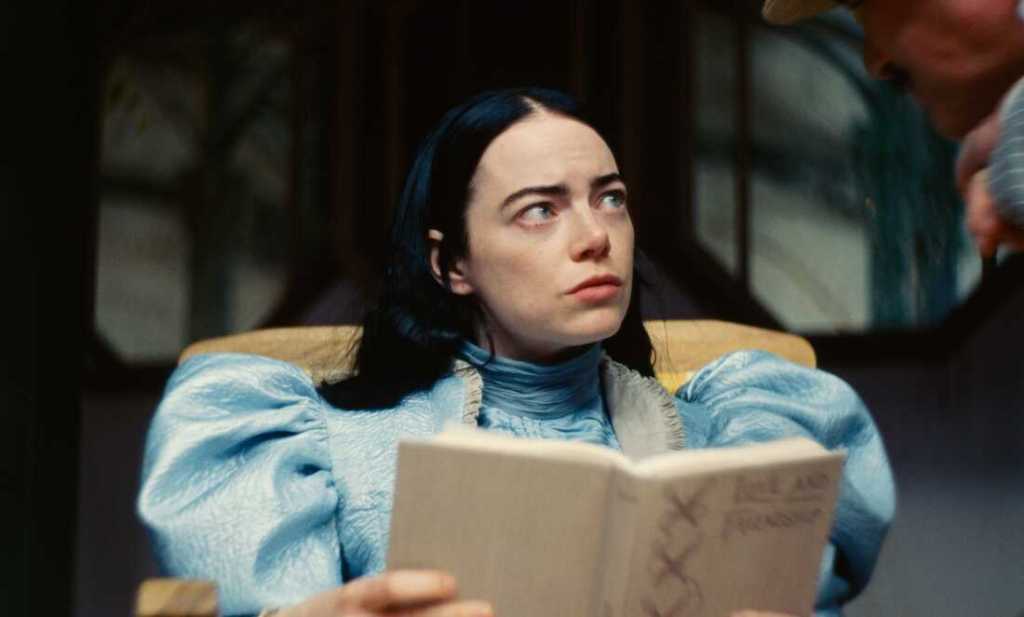
You start thinking a lot during the whole movie while Bella is still dancing, travelling and getting embedded in your head as the representation of many feelings and circumstances that may have been put in the back of your mind a long time ago.
Human nature flourishes before your eyes and feels like a new-screen sensation during this magical film. In this fantasy tale, which includes an endearing performance by an always precise Willem Dafoe as a firstly creepy but also moving character named «God» and Mark Ruffalo as a despicable lawyer/kidnapper/aristocrat, Bella is allowed to live a new life at the same time we’re proposed to seek or revisit ours with that same freshness and non-prejudice perspective of hers.

Bella is described as «retarded» by one of the characters at the beginning of the film. Still, we’re about to discover that actually, we’re the ones fitting in that category, and for all sorts of reasons different from what we could think of as «retardation», for instance. By the end, we know that the word has acquired a new meaning, much closer to «missing curiosity for life».
 La Vie Not Rose
Deja un comentario