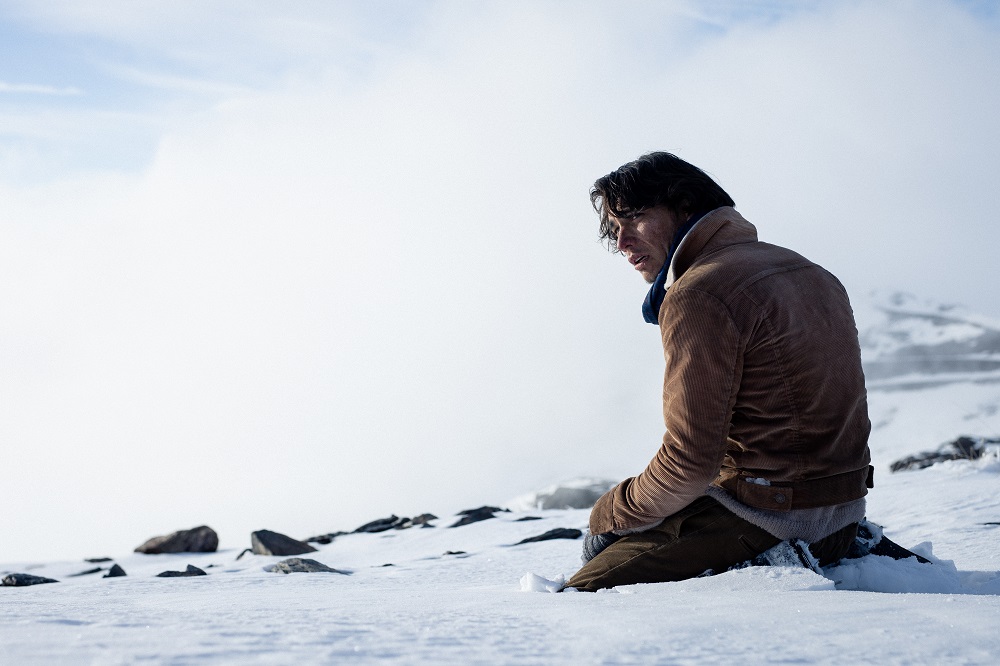
All social media is full of «curious facts» about this nightmare (few words can describe the hell on Earth the protagonists survived).
If you grew up in Mexico during the 90s, you might have watched this film on national TV on the primary children’s network, like me. I remember it being too cruel and making me think that it was unbearably sad and a bit harsh for my child-self to be watching that. When the internet arrived, I always crossed with two or three videos explicitly talking about the darkest point of this story. Still, thankfully J.A. Bayona’s film shows another side of it.
The special effects available today make the crash much more explicit and detailed than the 90’s US version. Your head explodes at the same time the whole group of protagonists suffers it, and the blur, silence, and screams of their accident become hard to shake off as a viewer.
But it’s not the technically perfectly crafted movie which gives you a deep and understanding point of view of the trauma of this group of people. If you’re not familiar with the story, a Uruguayan rugby team suffered a plane crash in the Andes on the Argentinian-Chilean border in 1972; around 40 passengers and only a few came back home. Their survival story and how they navigated through those two months in the mountains (2 months!!!) has impacted the world since then.
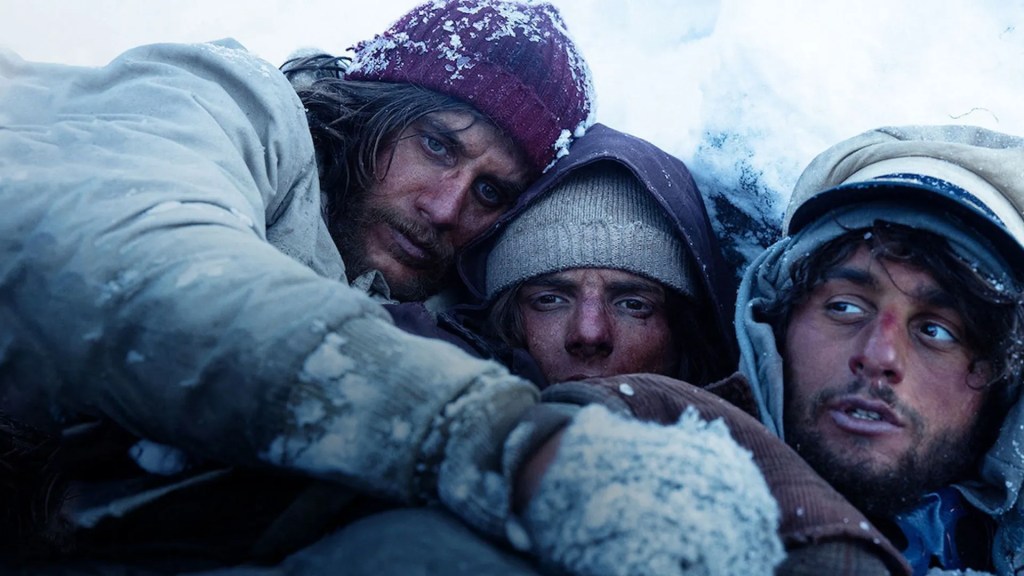
But what exactly was going through their minds all of this time? The Society of the Snow depicts perfectly the cruel bond they had to forge during the two months they were stuck in one of the coldest places on the planet.
The questions about survival, faith, destiny, and all other spheres of the human being are discussed during the movie. While you can know (from a quick Google search) who had survived, you can’t google and directly be touched by the horrible sensations they had during their time before the rescue.
I was traumatised by the rawness of The Impossible (also based on the actual 2004 Thai Tsunami), directed, also, by Bayona. I’ve never cried in a movie, just like I did with that one (I saw it on the 31st of December of the year of its release; the end-of-the-year nostalgia might have played against me). I could have been more clever with The Society of The Snow and had the tissues prepared. This is also a raw film, but, from a huge tragedy, it touches you in other level. I repeat, it’s not precisely because of the horrible accident but because of the strength these people found to survive; where do we find that? Where could I, MYSELF, could do that?
That thought rested in my head after dropping a couple of tears at the movie’s climax. Which would be my thoughts, or where would I be able to find the force to survive if I ever find myself with my life threatened?
Hopefully, instead of the anthropophagy, the first thing you’ll be googling is the numerous conferences and talks the survivors have given explaining their willingness to keep themselves alive during the adversity, how their lives continued and how their story has proven our human condition like very few we’ve known about.
Even being the 3rd recreation of the story, this is the most insightful and faithful interpretation and translation of all their emotions. This film makes justice and honours the lives of the ones surviving and the regrettable passing of those who didn’t. That’s the main reason to watch it: to learn about honouring life and getting along with the – sometimes inexplicable and horrible – existence of death.
 La Vie Not Rose
Deja un comentario